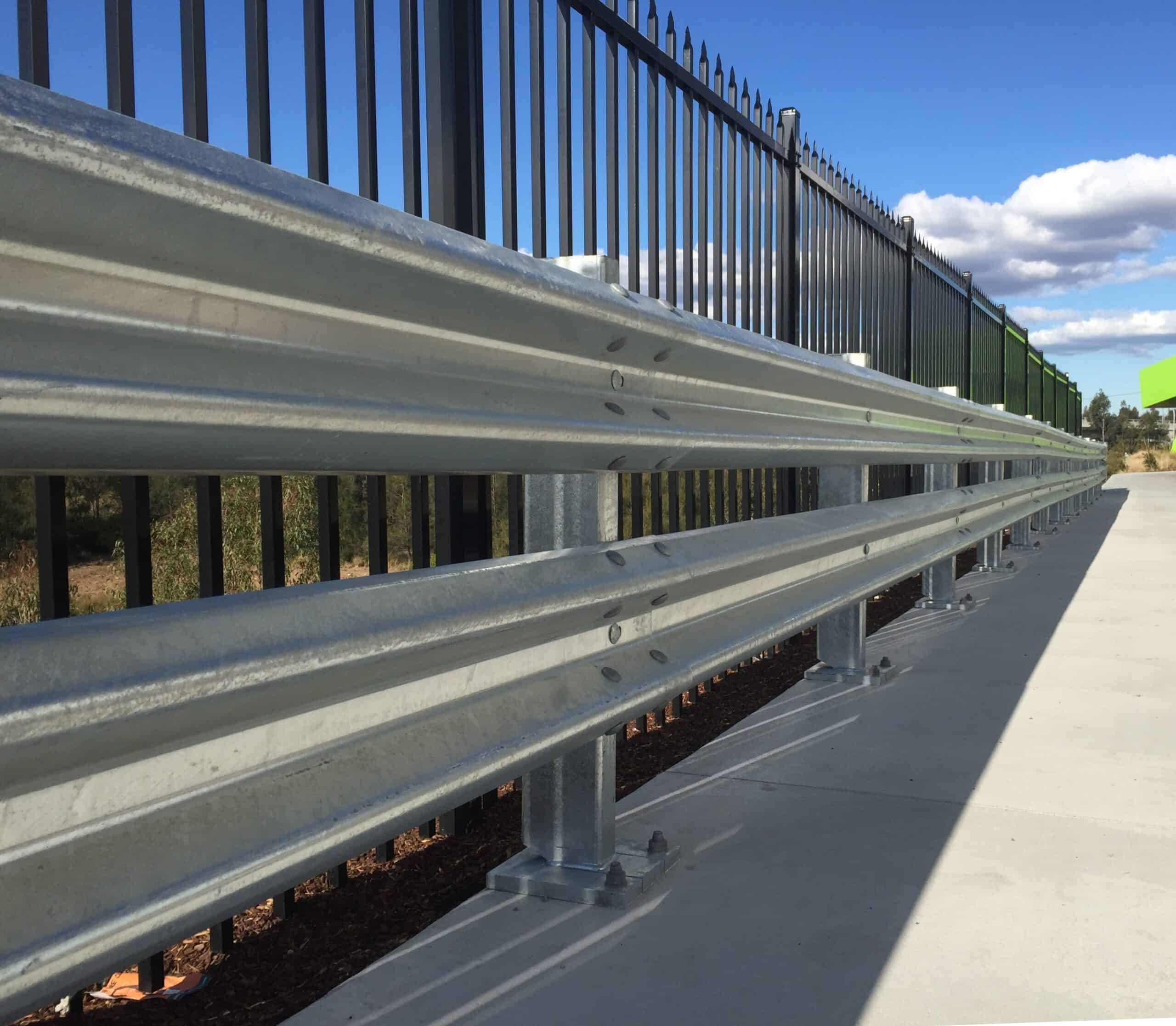
Warehouse barriers are specialised safety systems designed for use in factory and industrial settings. A warehouse environment must meet several safety requirements, including ensuring safe passage for pedestrians, protecting valuable equipment and machinery, and clearly marking the travel paths for forklifts and trucks.

The RhinoStop barrier system, developed by Safe Direction, features w-beam guardrails supported by energy-absorbing posts. These barriers are designed to absorb impact energy and contain vehicles safely. When installed near pathways, RhinoStop crash barriers can be configured with handrail attachments to prevent unauthorised access and direct pedestrians to safe crossing points. Additionally, the galvanised w-beam guardrails can be powder-coated to enhance visibility for operators of machinery.
Choosing the Right Warehouse Barrier for Your Project

Selecting the most appropriate RhinoStop barrier system considers the likely vehicle impact speed, the height of the vehicle impact and the location of the barrier system. Our team of experts can guide you through the barrier selection process.

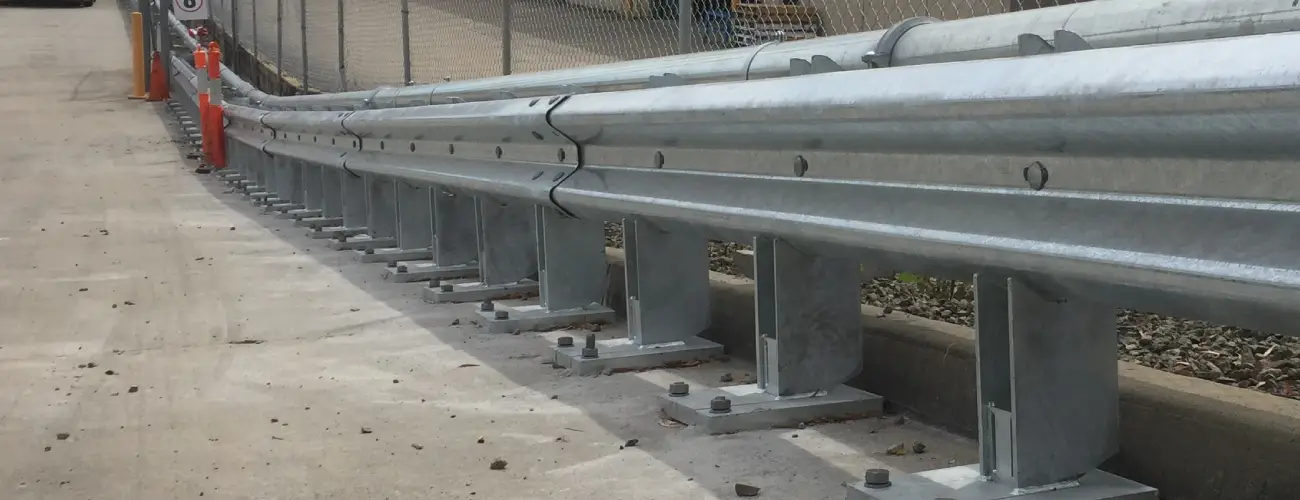
RhinoStop Standard w-beam guardrail barrier installed in a car park

RhinoStop Standard

RhinoStop Standard provides an economical barrier solution designed to withstand low to moderate vehicle impact speeds. Can be configured with pedestrian handrails.

RhinoStop Heavy Duty crash barrier protecting a warehouse aisle from forklift impact

RhinoStop Heavy Duty

RhinoStop Heavy Duty is designed for high energy and high speed vehicle impacts. The robust construction is suited for areas frequented by forklifts and heavy mobile machinery. Can be configured with pedestrian handrails.

RhinoStop TruckGuard twin w-beam barrier at a loading dock

RhinoStop TruckGuard

RhinoStop TruckGuard feature twin w-beam guardrails and a system height of 1000 mm. The preferred solution for loading docks, warehouses and logistic depots frequented by high centre-of-gravity vehicles.

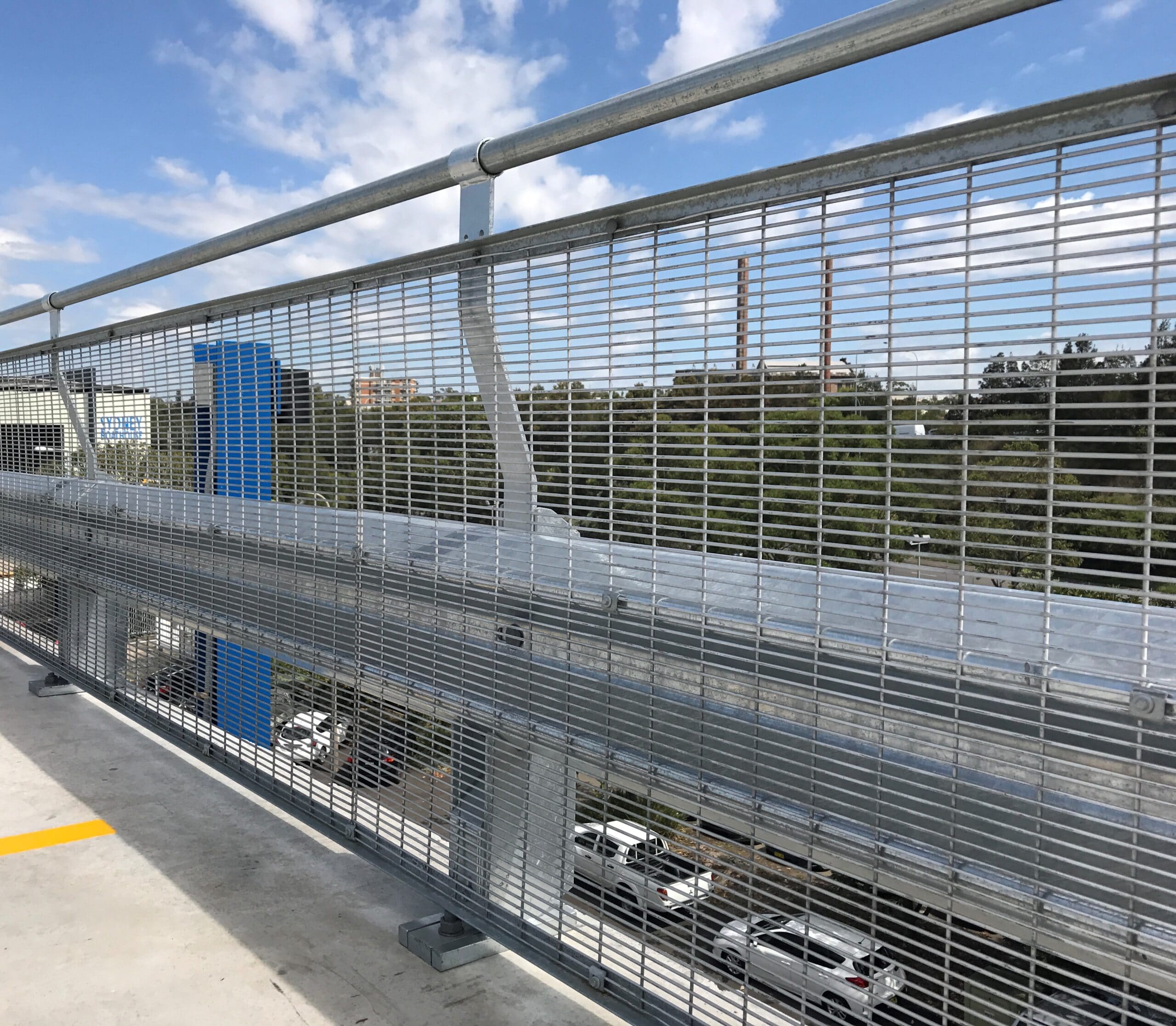
RhinoStop Elite balustrade barrier system with pedestrian fall protection

RhinoStop Elite

RhinoStop Elite is a balustrade system combining moderate speed impact protection with pedestrian fall protection. The narrow footprint and aesthetic design contributes to a high quality barrier system.

RhinoStop Sky-Edge barrier mounted on the outer edge of an elevated concrete deck

RhinoStop Sky-Edge

RhinoStop Sky-Edge positions the supporting energy-absorbing post on the outer edge of an elevated concrete deck preserving valuable floor space. Designed for low to moderate vehicle impact speeds and can be configured with pedestrian fall protection.

RhinoStop Screen high barrier shielding a pedestrian walkway beside pallet racking

RhinoStop Screen

RhinoStop Screen can be configured to a system height of up to 2.5 m shielding pedestrian pathways adjacent to pallet racking or anywhere stock is stacked vertically. The energy absorbing baseplates are capable of withstanding moderate to high speed vehicle impacts.

Each RhinoStop crash barrier system is full-scale crash tested to evaluate the capacity of the system and compliance with Australian Standards. Our crash testing considers ‘worst practical impact condition’ and is designed to represent real-life impact scenarios.

Frequently Asked Questions

A warehouse barrier is a guardrail barrier designed to withstand the accidental impacts of vehicles moving around a factory or warehouse. Warehouse barriers mitigate site risk by separating pedestrian areas from vehicle routes and reducing the potential for vehicle collisions with valuable plant and equipment.

Managing vehicle traffic contributes to the occupational health and safety of a warehouse environment. Where the risk of a vehicle striking a person cannot reasonably be eliminated, a barrier provides physical separation between vehicles and pedestrians and delineates the safe path for drivers.

The preferred barrier system should be capable of withstanding the likely impact loads encountered in the warehouse or factory. Designers should also consider the type of hazard requiring shielding and the movement of pedestrians adjacent to the barrier system. The ability of the crash barrier to absorb impact energy and prevent damage to the concrete substrate is also an important consideration for the asset owner.

The capacity or impact severity is calculated from the vehicle mass, speed and impact angle. Safe Direction publishes the impact energy (kJ) of each RhinoStop crash test configuration allowing designers to compare barrier systems.

Yes. The narrow profile of the systems suits installation alongside walkways. All RhinoStop barriers can be configured with handrail attachments, and the w-beam can be powder-coated safety yellow to match line marking and improve visibility.

A steel plate mounted low on the system closes off the gap under the w-beam. That stops forklift tynes reaching through the barrier into an adjacent walkway. RhinoStop Heavy Duty can be supplied with this bottom rub rail arrangement.

Sharp edges of the w-beam end panel can be shielded by attaching a stumpy bullnose, fishtail, or yellow end cap to prevent accidental injury.

The modular design of RhinoStop TruckGuard combined with a 1 m system height enhancing driver visibility makes it the preferred solution for loading dock areas.

All RhinoStop posts feature an energy-absorbing baseplate design. The yielding of the baseplate is achieved by cutting slots into the steel baseplate allowing the system to deflect during a vehicle collision. As the system deflects, the impact load is distributed to adjacent posts and forces to the anchor bolts are reduced. RhinoStop posts are significantly stronger than similar sized rigid post systems with RhinoStop recognised throughout the industry as the benchmark in warehouse barrier protection.